United Eco Solutions
complete brand, website, social media, and content solution
During my years in this newly-founded sustainability company, I took on many roles including IT and communications manager, web developer, social media manager, content creator, UI/UX designer, programmer, HR recruiter, and Geo-spatial GIS analyst.
I created more than one hundred internal documents, promotional content, presentations, print and digital material for clients, as well as took part in the Elmia Subcontractor fair in the year 2024 as a company representative.
Social media and content
At the start of my work at United Eco Solutions, the company’s Instagram and LinkedIn pages did not have much activity or content. I was tasked with creating initial bio sections for the company on both platforms, and create, share and manage content regularly.
I created original, explainer, and montage videos fully following the creative process, outlining, storyboarding, scripting, recording voice-overs, sound design and editing.
I was in charge of creating all content shared on the United Eco Solutions Instagram and LinkedIn pages until February 2nd 2026.
Website and online shop
The existing website for United Eco Solutions had extremely long load times due to lacking optimization in plugins and assets, as well as having a weak hosting plan.
My initial task was to troubleshoot the issue, which led to the creation of a clone of the website in a different building environment (Gutenberg instead of Elementor). I later on created an online shop for the company using WooCommerce and the Gutenberg FSE (Full Site Editing) builder.
In order to eliminate host limitations, I researched and found a new provider. After migrating the website to the new host, I created an entirely new fully responsive interface for the main site as well as the online shop using Elementor and ACF (Advanced Custom Fields) with full Stripe and Swish integration, and multilingual support enabled by TranslatePress AI.
Graphic and layout design
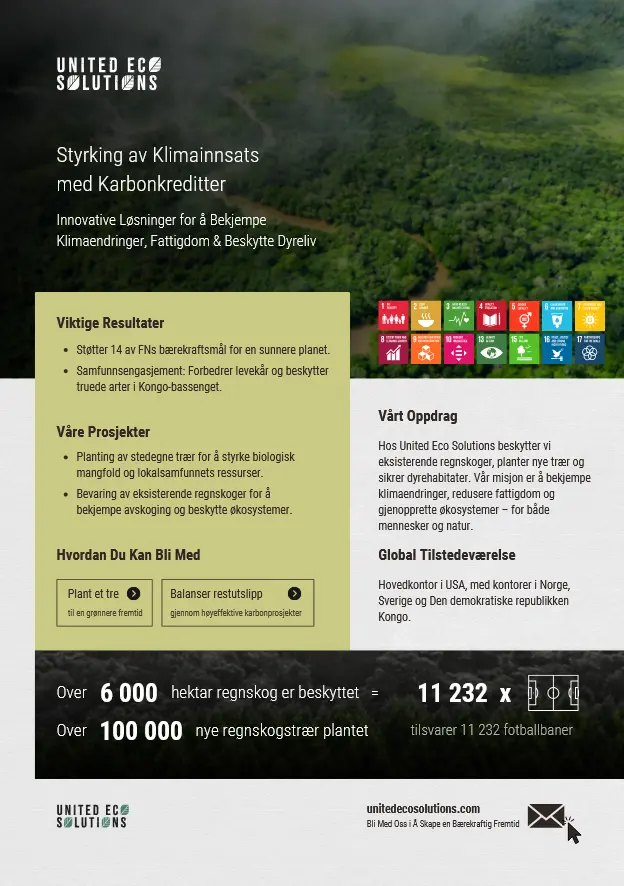
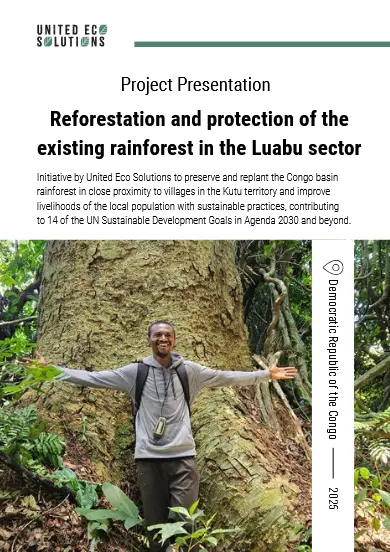
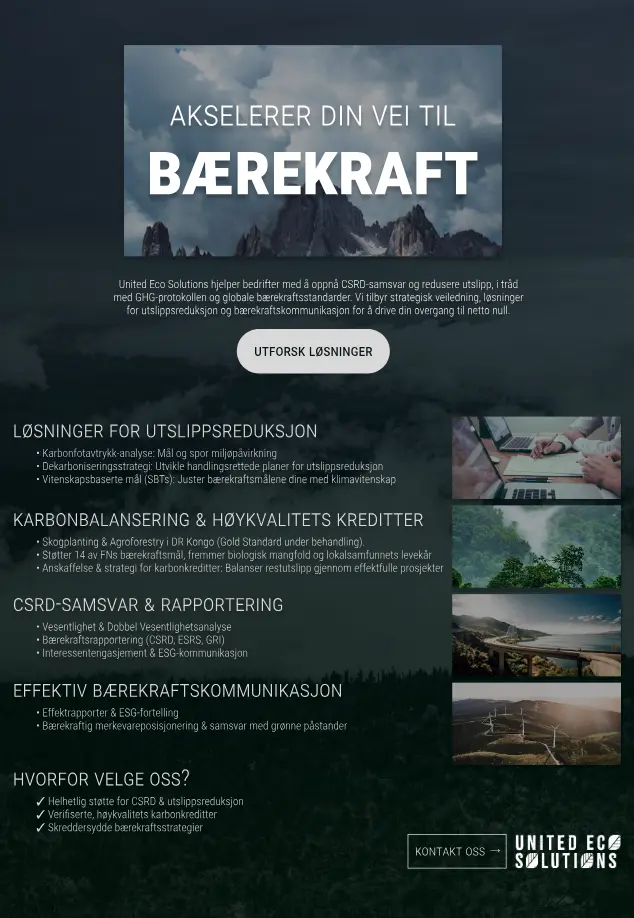
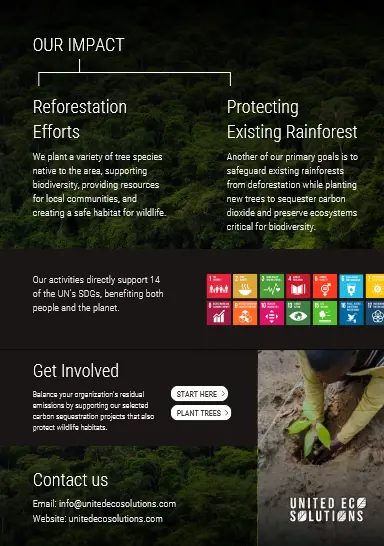
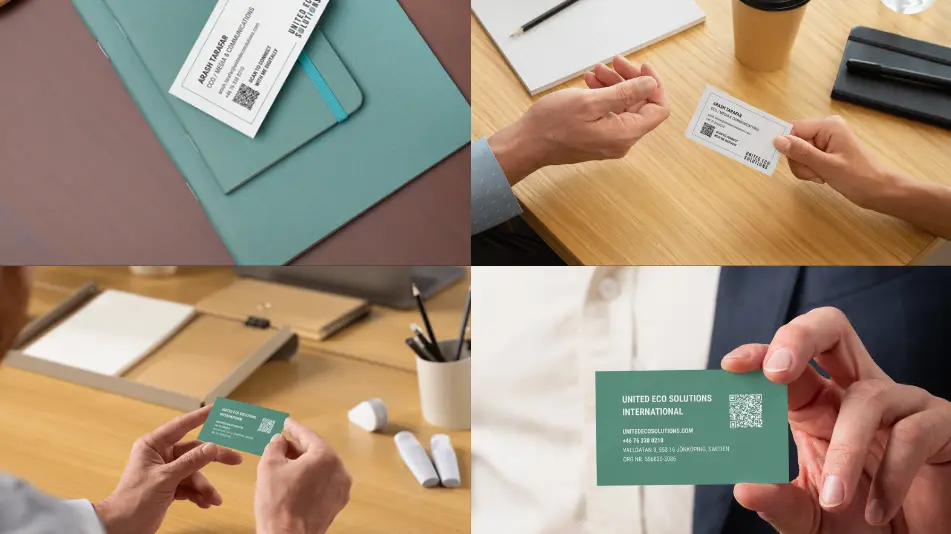
During my time at United Eco Solutions, I was tasked with creating tens to hundreds of documents, including but not limited to internal documents, company stationery and mockups, tenders, client presentations, service and product promotional material, tree planting certificates, booklets for clients and partners, and brand strategy boards.
I ensured complete consistency with brand visual identities in my designs, both for United Eco Solutions, and for external clients at the time of creation. Due to an ongoing NDA (Non-Disclosure Agreement) with United Eco Solutions, I cannot mention the names of the companies for which I created on-brand designs.
The images presented here are samples of my work. More can be presented during an interview or upon request.
At the time of viewing this webpage, I am still under a Non-Disclosure Agreement (NDA) by United Eco Solutions and there are limitations to what I can share with employers and clients. This webpage will be periodically updated as to reflect the state of the agreement.
Refreshed website UI
my design process
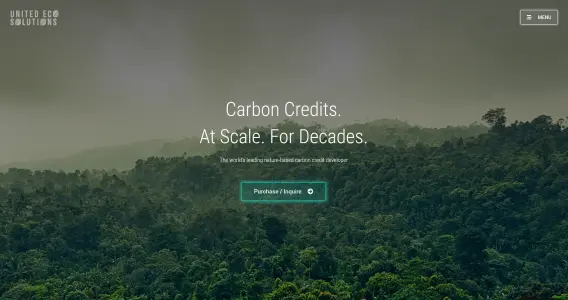
As part of the start of a re-brand, I was tasked with creating a new look for the United Eco Solutions website. By going through the entire design process and following principles of user experience design, I created prototypes of the website homepage for desktop and mobile screens.
My process for this design was as follows:
1. I conducted initial stakeholder meetings with managers and key employees in order to gather requirements of the business, and discussing customer needs.
2. I summarized the results and turned them into a brief, which would direct all design steps; from assembling a mood board to analyzing competitor websites and drawing inspiration from other UI designers on the web.
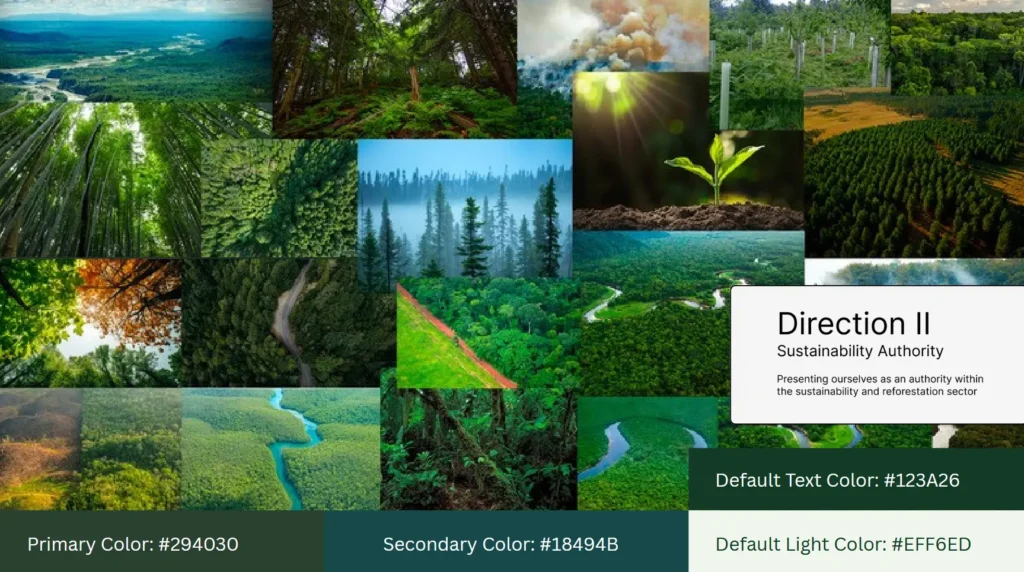
3. Based on the brief, I put together several mood board which aligned with company vision and mission, highlights values and communicates brand personality. The key difference between the proposed boards was positioning and marketing direction.
4. I presented company stakeholders with the mood boards, entered the approved mood board as a reference in a conversation with my AI agent dedicated to the United Eco Solutions’ brand, and derived a primary color for the new visual identity. This color would be used in certain key elements throughout the new user interface, after a few modifications.
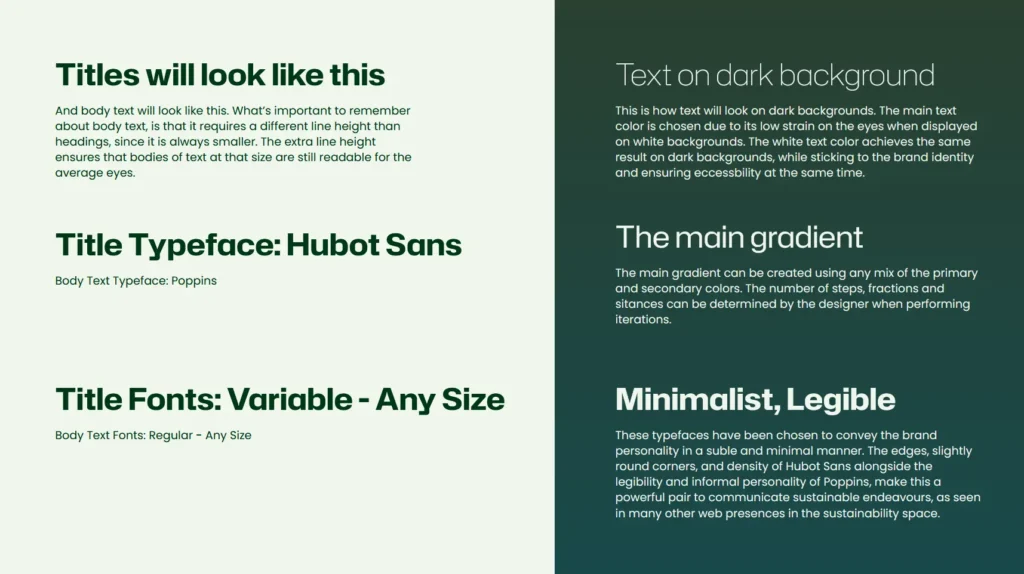
5. The choice of typography can make of break the experience of a website, affect conversion rates, and accessibility. I carefully studied state-of-the-art sustainability websites and after hours of comparison complete with matching different font and background color choices, arrived at a suitable set of Font families and colors.
* After this step, I created a new sitemap for the website, for more ease of navigation through the offered services and available information pages. However, since the design of the user interface was the focus in this project, I have left out that step from this explanation.
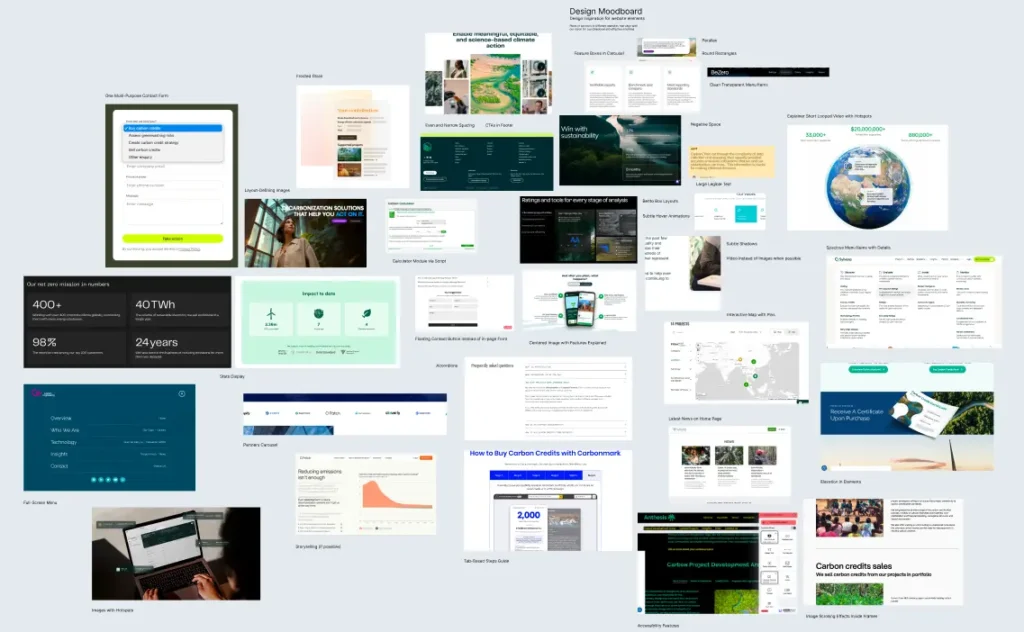
6. The final step before sketching a wireframe of the user interface is researching best practices in the specific industry for which a design is being made, and newest styling options available to developers.
I once again studied competitor and successful websites in the sustainability industry, and created an extensive board with good-to-include features as well as practices to avoid.
7. I created a sketch of the wireframe inside a drawing software in an Apple iPad Mini 7, devised a design system inside Figma, and created two high-fidelity prototypes in Figma to present the user interface for desktop and mobile.
IT and communications admin
As an initiative to lower the company’s IT costs and significantly shorten support response times, I took on additional responsibility of managing the entire Microsoft 365 subscription for United Eco Solutions.
In this role I added, removed, and extended product licenses, fixed file management and sharing issues, managed the company’s Microsoft Teams groups and Outlook email accounts, took extreme care to ensure employee privacy within the company in accordance with the GDPR, and handled backup and restore tasks.
Due to the confidential nature of this occupation, no related media is provided on this page.
Geospatial analysis
Due to the lack of land analysis specialists in the company at certain times, I took upon myself to create analysis documents and maps for use by the company’s partners and international sustainability activity verification organizations.
I learned principles of GIS software, the use of open source solution QGIS, analysis of satellite imagery with certain wavelengths used for determining deforestation rates and crop growth, and training unsupervised AI models for land type classification.
Due to the confidential nature of these analysis documents, no examples are shown on this page.
Recruiting for key positions
As part of my ever-expanding set of roles within the company, I was tasked with recruiting for key financial and executive roles based on briefs handed down by the board of directors.
Investments are core for any start-up or growing company, and in the process of recruiting for the role of investor relations associate I showcased my communication and organizational skills by reviewing and answering to more than 120 job applications across multiple platforms including LinkedIn, Hireflly, and Arbetsförmedlingen. My recruitment policy ensured that all applicants received an answer regarding the decision on their application, regarding of acceptance. The answers also included areas they could improve on.
The role of CEO is central to any business and in recruiting for this role on LinkedIn, I ensured clear communication with top talent across Europe, and a thorough review of all received applications.
The tools I used during my work
From graphic design and illustration tools such as Adobe Illustrator and Canva, to visual builders and code editors such as Elementor and Microsoft Visual Studio Code for web development, I used a wide array of software on both MacOS and Windows operating systems during my time at this role.